Singapore - Central Hub for Asia
We sail tonight for Singapore. We're all as mad as hatters here.
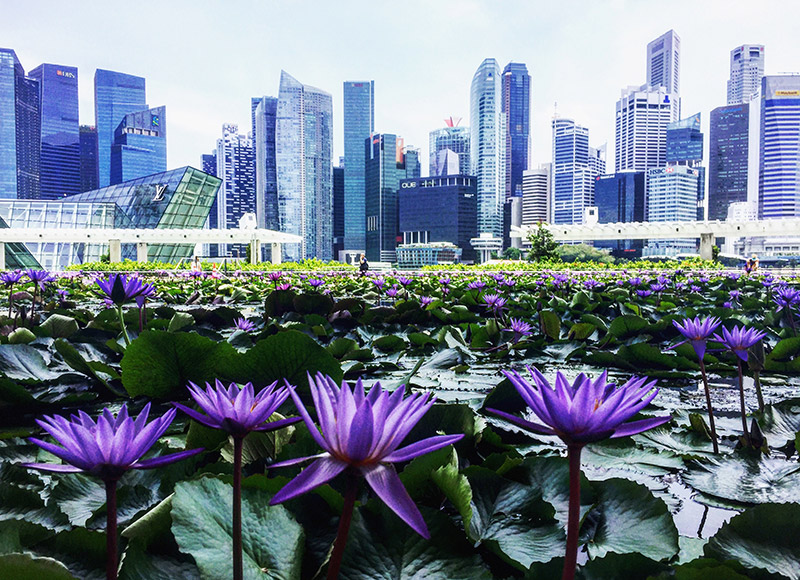
The Republic of Singapore is a small island in South East Asia. Despite its size, Singapore has a diversity of languages, religions, and cultures. There are four official languages: English, Malay, Mandarin and Tamil. Since its independence from Britain, Singapore has become one of the world's most prosperous, tax-friendly countries and boasts the world's busiest port. The super-clean and modern city centre is located in the south — consisting of the Orchard Road shopping area, the Riverside, the new Marina Bay area and the skyscraper-filled financial district known as the Central Business District (CBD). Here you can find loads of shopping opportunities, luxury hotels and a beautiful Marina promenade. Walking around you sometimes feel like you were in New York or Toronto, but everything feels clean (almost sterile) and organized. The downtown area is easily walkable, but also very well connected by Subway (MRT).
What to do in Singapore
Singapore makes a great stopover or starting point into South East Asia. Besides the numerous skyscrapers, the city also offers an all-year tropical climate. You can find lots of huge shopping malls and a bustling (but rather expensive) night life. Infinity pools are a big thing here, so make sure to book a hotel with a nice rooftop view if you're into that sort of thing!
The amazing selection of different food is definitely one of its selling points. The city has a amazing food scene ranging from hawker centres (open-air), food courts (air-conditioned), cafes, fast food, simple kitchens, but also high-end restaurants. These hawker centres can be found in all parts of the city, with indoor and outdoor seating, and a wide range of food stalls that cover the whole Asian cuisine. Some places to look out for are the Chinatown Food Market, Maxwell Road Hawker Center and Satay by the Bay within Gardens of the Bay.
Gardens by the Bay is probably the most well known garden inside the city. An honorable mention is the 150-year-old Singapore Botanic Garden which is the city's first UNESCO World Heritage Site. You can easily spend the whole day in these vast green landscapes. A must-see are the massive nature conservatories Cloud Forest and Flower Dome, which even include the world's largest indoor waterfall. Tickets for these two attractions cost $28 per person but they are definitely worth it. The outside areas in Gardens by the Bay are also free of charge. A must-see is Supertree Grove with its OCBC Skyway ($8), a great way to see a musical light show (7:30pm / 8:30pm) while enjoying the impressive Singapore skyline from an elevated walkway. This is a perfect location for taking photos. Just make sure to bring a tripod at nighttime! If you're feeling hungry after a long day of walking and exploring, you can find a fine food court called Satay by the Bay. The best time of day to visit Gardens by the Bay is either the early morning (fewer people) or in the late afternoon, to catch the light show at the supertrees.
Rules and Regulations
Despite Singapore's economic success, it maintains a questionable human rights record. While Singapore provides a constitutional right to 'freedom of expression', there are many exceptions that act to limit this right, including exceptions related to political activism and public demonstrations. The government has restricted freedom of speech and has limited other civil rights. A Singapore law dating from 1938 bans sexual relations between men. As such, Westerners are strongly advised against greetings like kissing on the cheeks and should stick to the much common practice of shaking hands instead.
Singapore is one of the safest major cities in the world by virtually any measure. Singapore's cleanliness is achieved by strict rules against public nuisances like spitting, littering, and drinking and eating on public transport. Walking around the city, look out for signs that show these rules and the draconian fines if you break them and get caught. Alcohol and Tobacco are heavily taxed (a so-called 'sin-tax') and therefore much more expensive compared to other countries in Asia. Also forbidden is the sale of porn or drugs (obviously) and famously even the sale (not consumption) of chewing gum.
Accommodation in Singapore
Accommodation and housing in Singapore is expensive by South East Asian standards. As a result, you would generally be looking at rentals on par with the likes of New York and London. Backpackers' hostels and cheap hotels can be found primarily in Little India and Chinatown districts. Rooms are generally small and not fancy, but are still clean and provide basic facilities like a bathroom and television. Our little hotel had also very small beds, so beware of that if you're rather tall! Very trendy are the so-called 'space pod' hostels. These offer a little bit more privacy than a regular dormitory room and a usually conveniently located in the city centre. You will still have to pay around 30 Euros or Dollars per night, around half the price of a (very) basic hotel room. It's a pity that accommodation is so expensive. I would have loved to extend my stay for a couple days, there's just too much to do in this city!
Getting around in Singapore
Singapore has a fairly easy visa policy: most nationalities can enter Singapore without a visa for up to 30 days. EU-nationals, Australia and the US can enter the country without a visa for up to 90 days. The city therefore makes a good base for exploring South East Asia, with nearly all of the region's countries and their main tourist destinations — Bangkok, Phuket, Angkor Wat, Ho Chi Minh City and Bali — under 2 hr away by plane. The MRT (Mass Rapid Transit) and LRT (Light Rail Transit) are trains that are the main trunk of Singapore's transit system. They are a cheap and very reliable mode of transport. Changi Airport, awarded the best airport in the world several times, is a popular stopover when traveling from and to Australia from Europe. Within the city-state, taxis and location based apps like Grab and Uber are very popular and should be downloaded before or during any trip to South East Asia. The selling point of these apps are the guaranteed fixed prices for the journey, that conventional taxis often don't offer. If you're not familiar with local prices and distances, you're more likely to pay overpriced fares.